The team could follow the standard for secure coding as well as update dependencies and yet, they may have a vulnerability that was not noticed by anyone. Real attacks don’t follow a check list. An attacker may combine an unsecure authentication policy and a vulnerable API endpoint, abuse a password-reset workflow or find out that a user’s account has access to other tenant’s data.
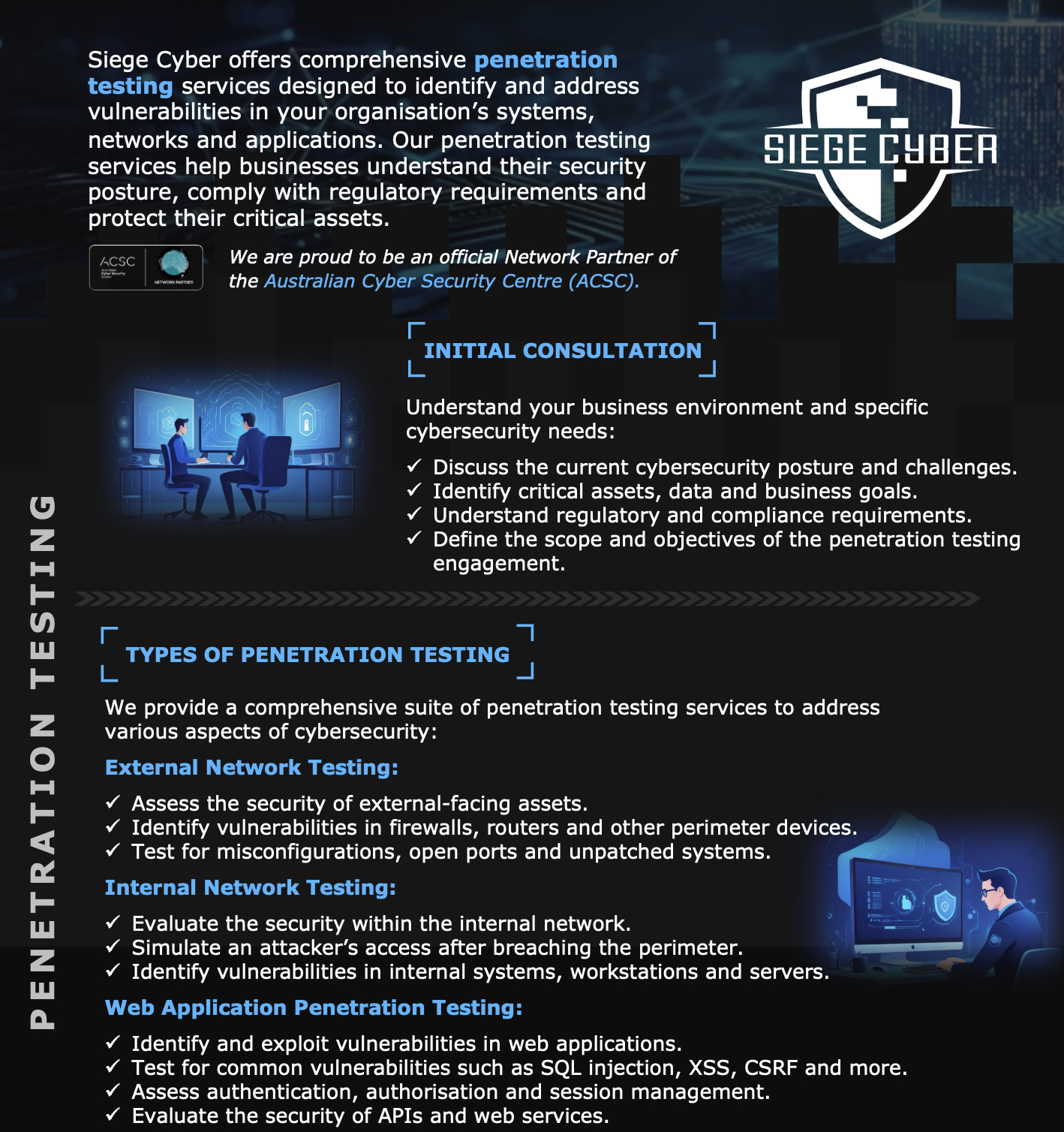
Professional penetration testing Brisbane businesses use for security assurance looks at systems from that adversarial perspective. Testers who are experienced don’t inquire whether security controls are in place, but rather if they can be circumvented.
This difference is important for Australian companies who handle sensitive data such as customer data as well as financial records, health records, or any other assets.
The automated scanning is just part of the story
Vulnerability scanners can be very helpful. They can detect outdated software, insecure headers and CVEs as they also identify obvious configuration issues. They are not able to know how an application must behave.
Consider a customer portal where users can change their account number within a request and retrieve another invoices from a company. The server could return perfectly valid responses, so the automated scanner will not find anything unusual. Human testers can spot the problem with authorization in a flash.
Web penetration testing is a mix of automation and manual investigation. Testers investigate authentication sessions, access control as well as injection risks API behavior, weaknesses in configuration and business processes trying to find the right combination of flaws which could result in significant harm.
SaaS environments have their own security concerns
Multi-tenant cloud solutions require attention to testing, as one error can affect many customers simultaneously.
Saas penetration tests must include tenant isolation, API authorizations, role changes, and account recovery. Additionally, they should examine integrations with external services, as well as data exposure, account recovery, and API authorization. The tester shouldn’t just check if the feature is functional, but also determine if it could be utilized in a way that was never intended by the creator.
For instance, a user given a role of a minimum level may not be able to see an administrative role within the interface. It doesn’t mean the API does not allow them to calling directly. Finding out the difference requires active testing, not just a review of what is displayed on the screen.
Modern web applications have bigger attack area
Applications today integrate JavaScript front end APIs, cloud services, and APIs. They also contain microservices and integrations from third parties. There may be weaknesses in any component, as well depending on the trust that exists between the two.
Thorough web app penetration testing follows those connections. Testing may include examining the way tokens are generated, whether the endpoints that are sensitive enforce authentication in a consistent manner, and how data stored by users is moved across services.
Siege Cyber specializes in this type of testing of applications and is able to work with modern frameworks and APIs, cloud-hosted systems and intricate application architectures instead of treating every website as a list of URLs that need to be scanned.
A useful report should aid developers in resolving the issue
Security vulnerabilities are only half the task. The most useful security testing happens when engineers can replicate and understand the problem in addition to resolving the danger.
Siege Cyber reports include evidence replication steps and risk ratings, as well as impact analysis, and instructions for resolving the issue. Business stakeholders are provided with an executive explanation of the issue, while technical teams get the detail needed to resolve it. Important findings can be raised during the engagement instead of waiting for the report to be completed.
The testing after remediation gives another layer of assurance, by proving that the issue was fixed without the need to create another one.
Penetration testing can be a useful method for organizations looking to validate their systems, show the compliance of their systems or gain more confidence prior to a major release. The policies and tools don’t offer this, but it gives them a method to discover the ways a skilled hacker could use the software. The importance of the test is determining the answer prior to an actual adversary.